Occlusal splints: tooth protection and oral care
Protection for your smile and attention to jaw health
Do you wake with jaw pain, feel facial tension or notice worn teeth? These signs may relate to bruxism, the clenching or grinding of teeth that can occur during sleep or while awake.
At Pro Dentes Odontologia, Dr. Carlos Eduardo Carvalho Vilela — CRO-SP 62085 — assesses and recommends occlusal splints, appliances made to help protect teeth and reduce the consequences of clenching and grinding.
 Enlarge image
What is an occlusal splint?
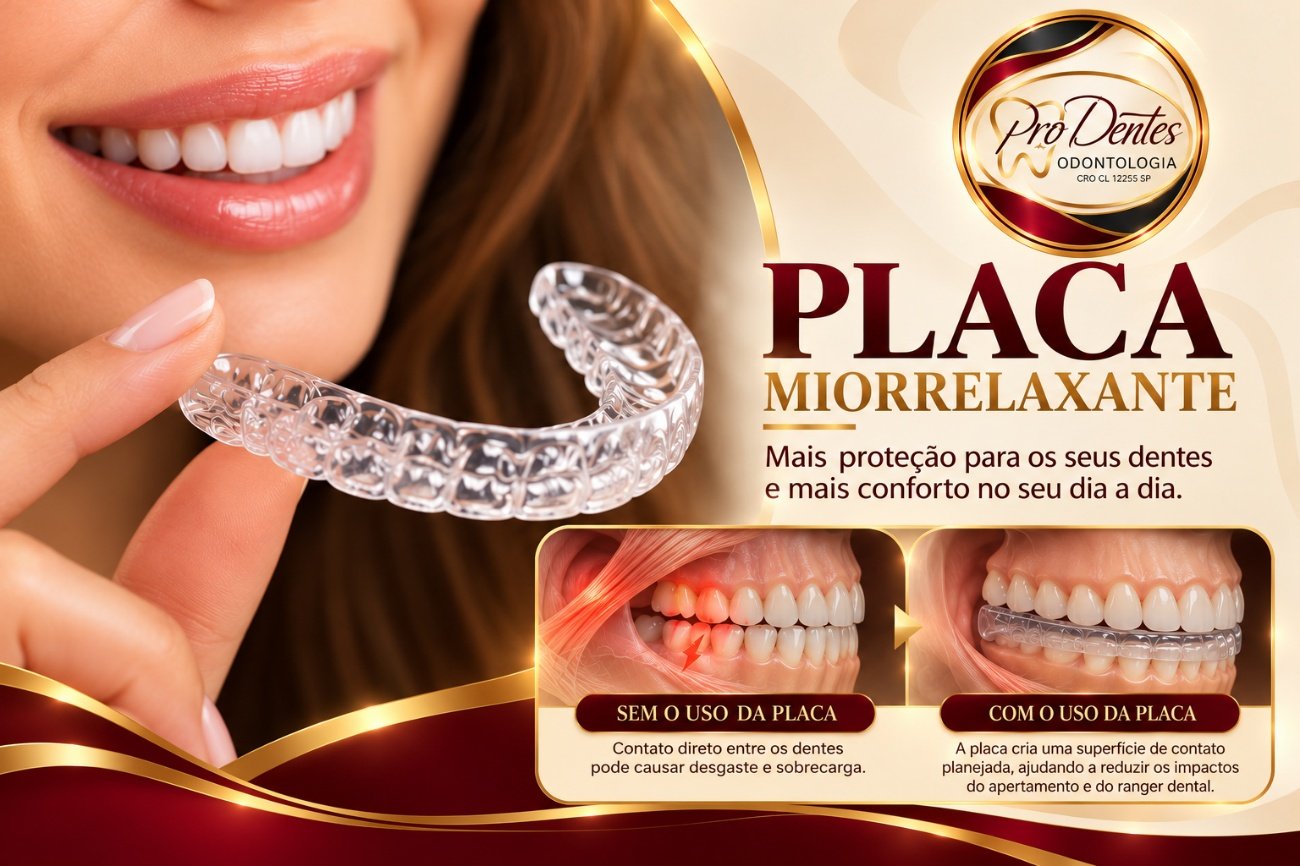
An occlusal splint is generally custom-made to fit the patient’s dental arch. Its use depends on clinical assessment, particularly for bruxism and certain conditions involving overload of teeth and chewing muscles.
By creating a planned contact surface between teeth, a splint helps reduce direct wear and may help manage some muscle symptoms associated with clenching.
What is it used for?
Use may be considered for:
- Tooth protection: helping reduce wear caused by repeated contact during clenching or grinding.
- Muscle pain relief: potentially reducing certain discomforts in chewing muscles.
- Reducing overload on teeth: helping protect restorations and other dental structures from excessive forces, according to the case.
- Attention to jaw symptoms: assisting management of some muscle-related pain and certain temporomandibular disorders.
- Oral health preservation: forming part of a care plan to reduce potential bruxism-related damage when appropriately indicated and monitored.
Which signs warrant attention?
Seek dental assessment for wear or frequent tooth fractures, unexplained sensitivity, jaw pain or fatigue on waking, facial muscle tension or recurrent clenching.
These signs alone do not confirm bruxism. Professional assessment is essential to identify possible causes and determine appropriate treatment.
Does a splint eliminate bruxism?
An occlusal splint is an important tool for protecting teeth and helping manage certain symptoms, but it does not necessarily eliminate the cause of bruxism. Treatment depends on the factors involved and may require other measures following clinical assessment.
Fitting, adjustment and periodic follow-up are essential to check that the appliance is working appropriately and remains indicated.
Care for your teeth before wear progresses
At Pro Dentes Odontologia, Dr. Carlos Eduardo Carvalho Vilela assesses signs of bruxism, tooth and bite conditions and the possible need for an occlusal splint.
Individual care helps protect the smile, preserve dental structures and seek greater everyday comfort.
Pro Dentes Odontologia — prevention, care and protection for your smile.
 PRO DENTES DENTISTRY
Talk to our team
Book an assessment for guidance based on your individual needs.
Chat on WhatsApp